

Signature Canvas, Glovetanned Leather and More: Coach Handbags Explained
Shapes are only part of the story: the appeal of coach handbags derives just as much from what they are made of. Glovetanned leather, which Coach dates to the 1950s, and Signature canvas with its “C” monogram, which debuted in 2001, are the two materials that stand out most. Pebble leather, natural-grain leather, regenerative leather, quilting, exotic skins and recycled leather fibers round out the picture. Details such as the 1964 turnlock and the kisslock frame clasp mean hardware matters too.
While Coach also sells shoes and coach clothing, this explainer focuses on bags, covering each material and detail in turn. Every claim that is reported rather than confirmed is flagged accordingly. All prices given are observed market prices and not an official price list.
What Is Glovetanned Leather?
A leather finish inspired by the way a worn baseball glove becomes softer with wear goes by the Coach name glovetanned leather. The credit is given to Miles Cahn, a member of the Manhattan workshop since 1946 who bought the business with his wife, Lillian, in 1961. The more it is carried, the more the leather softens and improves, Coach says. Read technical claims about the process with caution, since detailed tanning chemistry is not documented in reliable sources.
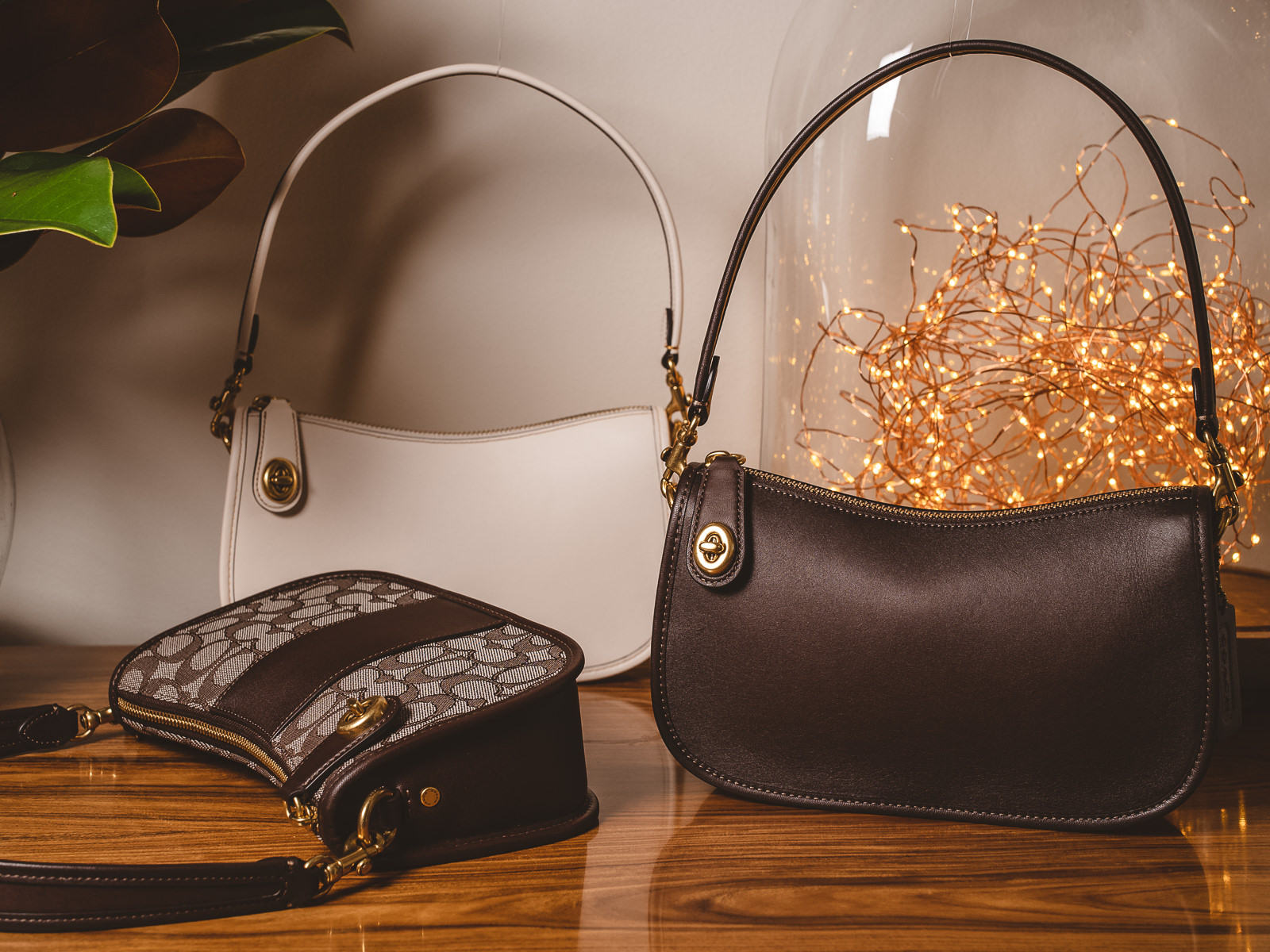
Glovetanned leather, still a core material, turns up in current bags such as the Soho Bag 25, the Juliet 25, the Kisslock Frame Bag and the Swinger 20. At an observed $350, the Kisslock Frame Bag was among the lowest full-price Coach bag prices seen in 2026. Vintage glovetanned pieces also have a following among collectors, because the leather takes on a patina as it ages.
Coach’s Signature Canvas: What It Is and How Old It Is
Fabric covered all over in Coach’s “C” monogram pattern is what Coach calls Signature canvas. It was introduced in 2001 as part of the Signature collection, during the logo-heavy fashion of the early 2000s. Reed Krakoff, a creative director who had joined Coach in 1997, is said to have been in charge when it arrived. Because https://couch-clothing.com/ the pattern has a classic look, many people assume it is a mid-century design, yet it came along six decades after the 1941 workshop.
Coach now offers both Signature canvas and Signature jacquard, a woven version of the pattern, across many lines. A Soho 25 in Signature jacquard and a Juliet 25 in Signature canvas are current examples. The Tabby uses the monogram differently, as Signature “C” hardware rather than an all-over pattern.
Pebbled Leather, Natural-Grain Leather and Regenerative Leather
How a bag looks and wears depends partly on the grain of its leather, so it matters that not every leather coach bag is glovetanned. A Willow Bucket, a Willow Shoulder bag and the Willow Tote 24 (a classic pebble-leather coach tote bag) have all been part of the Willow family, a group shaped by pebble leather and its textured surface. Natural-grain leather gives the Brooklyn its relaxed, slouchy feel, whether as the Brooklyn 28 or the larger Brooklyn 39. In the UK, the Brooklyn 28 was recorded at £350.
Reworked older designs come in regenerative leather, for example a Rogue in Regenerative Leather and a Soho Flap Bag in Regenerative Leather. To find out how each bag’s leather is described, it is best to read the product descriptions on Coach’s own website. Choosing between these leathers is largely a matter of taste, since a structured coach shoulder bag and a soft hobo wear and age in different ways.
Quilting, Exotics and Recycled Materials
Boosted by the success of the Pillow Tabby, quilting has grown into one of the most visible Coach treatments. Found under names like Tabby Shoulder Bag 26 With Pillow Quilting, it arrived in 2021 and fills out the Tabby shape with padded quilting. A flatter quilted Tabby 26 is offered too, with quilted versions observed at prices above the $475 plain Tabby 26. The Kisslock Dreamer 21 in quilted nappa leather is an older quilted style, now seen mainly through Coach (Re)Loved.
The highest Coach bag price seen in 2026 belonged to a Rogue 25 in alligator, observed at $8,000, with exotic skins sitting at the other extreme. Recycled materials are core to Coachtopia, the circular-design sub-brand Coach launched on 20 April 2023. When it launched, Coachtopia bags reportedly contained at least 50% recycled leather fibers. Coach (Re)Loved, launched in 2021, prolongs the life of existing bags through restoration and upcrafting.
The Hardware: Turnlocks, Kisslocks and the Horse and Carriage
The turnlock is Coach’s best-known closure, a brass toggle that twists to secure a flap. Bonnie Cashin introduced it in 1964, and Coach says she took the idea from the toggle on the top of her convertible. Cashin reportedly designed for Coach on contract until 1974, and Coach’s own pages list her start year as both 1961 and 1962. Today’s designs such as the Cassie Crossbody Bag 19 and the Swinger Bag 20 use turnlocks.
Modeled on vintage coin purses, the kisslock is a frame clasp which Coach connects with the Cashin era. Several different bags carry the name, among them the Kisslock Frame Bag and the Kisslock Barrel Bag, and the two should not be confused. No reliable date can be given for the horse-and-carriage emblem, another long-standing Coach symbol, because sources do not agree on when it first appeared.
Can a Storypatch or Hangtag Prove Anything?
Each Coach bag carries a Storypatch, Coach says; it is a sewn-in patch with a short statement about Coach craftsmanship and a unique registration number. Resale guides say the earliest creeds carried no number at all; creed is also the name collectors often give to older versions. Coach states that its leather hangtag made its debut in 1972. On its own, a patch does not prove a bag is genuine: Coach presents the Storypatch as a mark of authenticity, but counterfeiters copy patches too.
Coach also says it does not authenticate merchandise or confirm serial numbers for shoppers. Instead, it tells shoppers to buy from Coach stores and outlets, Coach’s own website or authorized retailers. On top of that, resale guides point to physical checks: a pressed-in patch rather than a printed one, straight stitching and solid, weighty hardware.
Coach Bag Materials at a Glance
The following table summarizes the main materials and details used on Coach bags, along with an example of where each one appears. Dates are given only where they are documented, which is why several rows state otherwise. Size, color and promotions all move prices, and the prices here are observed market prices, not an official list. The same bag often is made in several materials, so the material can be as important as the model name when comparing prices. In the UK, for example, the Tabby 26 and the Empire Carryall 34 were both observed at £475. Glovetanned leather softens with use by design, but structured styles are built to hold their shape, which shows that materials also affect how a bag ages. Before you buy, check the product description on Coach’s own website if a listing does not name the material clearly.
| Material or feature | Description | Date on record | Example style |
|---|---|---|---|
| Coach glovetanned leather | A soft finish based on a worn baseball glove | Coach dates it to the 1950s | Kisslock Frame Bag, observed price $350 |
| Coach Signature canvas | Fabric covered in the “C” monogram | 2001 | Juliet 25 in Signature canvas |
| Coach Signature jacquard | Monogram woven into the fabric | No documented date | Soho 25 in Signature jacquard |
| Pebble leather | Textured grain leather | No documented date | Willow Tote 24 |
| Natural-grain leather | Relaxed leather with a slouchy feel | Brooklyn, launched August 2024 | Brooklyn 28, observed in the UK at £350 |
| Pillow-style quilting | Puffy, padded quilting | Pillow Tabby 2021 | Tabby Shoulder Bag 26 With Pillow Quilting |
| Exotic skins | Alligator and other exotics | Not documented | Alligator Rogue 25, observed at $8,000 |
| Turnlock closure | Twisting brass toggle closure | 1964 | Cassie Crossbody Bag 19 |
| Kisslock clasp | Coin-purse frame clasp | Linked to the Cashin era | Kisslock Barrel Bag |
Coach Outlet Materials: Any Different?
A coach outlet bag is a genuine Coach product, since Coach Outlet operates as Coach’s own official channel. What is less clear is how outlet materials measure up to those of a full-price coach store. In 2014, Coach’s head of investor relations was quoted saying roughly 85% of outlet merchandise was made for the outlet channel, a figure that is now dated. Consumer blogs and social videos allege some made-for-outlet items use lower-grade leather, coated canvas, lighter hardware or simpler linings, whereas other sources point out that differences vary by style.
Since no public Coach comparison of specifications has been found, claiming that outlet bags are invariably worse, or exactly the same, runs ahead of the evidence. The line is blurred further since Tapestry has also talked about bringing some full-price collection product into outlets. Until about 2020, made-for-outlet style numbers typically started with an “F”, but newer style-number formats make that signal unreliable for recent bags. Where the bag was bought, such as a Coach Outlet store or the official online outlet section on Coach’s own website, is today’s most dependable signal.